
How to Humanize AI Text: 7 Practical Tips
AI writing tools can help you generate ideas, create outlines, and draft content quickly. However, AI-generated text often has a recognizable style: repetitive sentence structures, generic wording, and a lack of personal voice.
Whether you’re drafting notes, brainstorming ideas, outlining a project, or creating professional content, reviewing AI-generated text is an important step. Thoughtful editing can improve readability, refine the tone, strengthen key points, and help the writing feel more natural and engaging.
In this article, we’ll explain what AI text is, why it’s important to humanize it, and seven practical techniques for making AI-generated writing sound more natural, including tips on using an AI Humanizer tool.

What is AI text?
AI text is content generated by artificial intelligence tools (AI-tools). These tools are powered by large language models (LLMs), which generate text by predicting which words are most likely to come next based on patterns learned from vast amounts of training data.
AI can produce convincing text in seconds, including summaries, emails, and reports. However, it does not truly understand meaning in the way humans do. Instead, it relies on statistical patterns in language.
As a result, AI-generated writing can sound polished while still lacking qualities that make human writing effective, such as personal insight, contextual awareness, nuanced reasoning, and a distinctive voice.
Why should you humanize AI text?
AI-generated content can save time, but publishing or submitting it without editing often leads to predictable, generic writing.
Humanizing AI text helps you:
- Develop a unique writing voice
- Improve readability and engagement
- Eliminate repetitive phrasing
- Strengthen arguments with original insights
- Adapt content to a specific audience
- Verify accuracy and remove misinformation
This is particularly important in academic writing. Universities expect students to demonstrate critical thinking, personal analysis, and subject knowledge. These are all qualities that AI-generated text alone cannot provide.
7 ways to humanize AI text
AI can help generate content quickly, but the first draft isn’t always ready to use as-is. AI-generated text can sometimes sound repetitive, generic, or overly formal, which may make it less engaging for readers. Humanizing AI text involves refining the language, structure, and tone so it feels more natural and aligns with your intended message. Here are seven practical techniques to help improve AI-generated writing.
1. Prompt AI to use more natural sentence variation
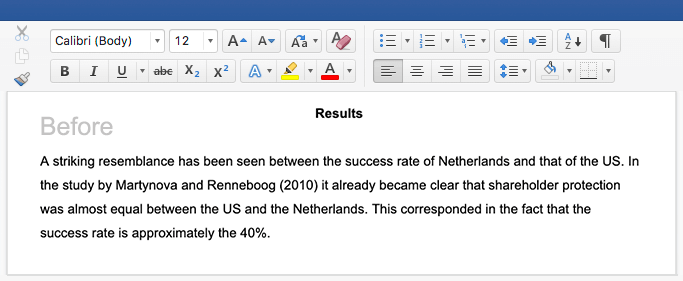
One common sign of AI-generated writing is predictable sentence structure. Human writers naturally alternate between short and long sentences, creating a more engaging rhythm.
Instead of using a basic prompt, try specifying how you want the text to sound.
This encourages more natural writing patterns and reduces the mechanical feel often associated with AI-generated content.
2. Improve readability
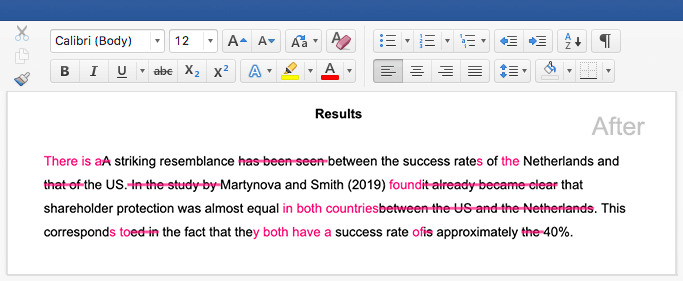
AI often produces text that is more complex than necessary. Long sentences and unnecessary abstraction can make content harder to follow.
When revising AI-generated text:
- Shorten overly long sentences
- Replace complicated words with simpler alternatives
- Remove unnecessary filler phrases
- Break large paragraphs into smaller sections
A useful benchmark is a readability level that is easy to understand without oversimplifying the content.
| Before | After |
|---|---|
| An algorithm is a procedural framework designed to execute a sequence of operations in order to achieve a specified computational objective. | An algorithm is a structured sequence of steps used to solve a problem, process information, or accomplish a specific computational task. |
3. Replace unnecessary jargon
AI tends to overuse formal language and buzzwords, especially in professional or business contexts.
Watch for phrases such as:
- Leverage
- Utilize
- Facilitate
- Optimize
- Strategic initiative
- Robust framework
These terms aren’t always wrong, but they’re often less effective than simpler alternatives.
| Before | After |
|---|---|
| Organizations can leverage innovative methodologies to optimize operational efficiency. | Organizations can use new methods to work more efficiently. |
Clear writing is usually more effective than complicated writing.
4. Add specific examples
AI-generated content often stays at a general level. Adding concrete examples makes your writing more useful and believable.
You might write: “A student who reviews lecture notes for 15 minutes each day is often better prepared for exams than someone who waits until the night before.”
Specific examples help readers connect abstract ideas to real situations.
5. Incorporate your own voice
One of the easiest ways to humanize AI-generated text is to add your own perspective.
Ask yourself:
- What do I think about this topic?
- What experience do I have with it?
- What examples would I personally use?
For academic writing, this doesn’t mean adding opinions without evidence. Instead, it means bringing your own analysis and interpretation to the discussion.
AI can generate a starting point, but your contribution is what makes the writing unique.
6. Fact-check every claim
AI systems sometimes generate inaccurate information, fabricated statistics, or nonexistent sources.
Before using AI-generated content:
- Verify facts using credible sources
- Check quotations against original publications
- Confirm dates, names, and statistics
- Review citations carefully
This step is especially important in academic writing, where accuracy and proper sourcing are essential.
7. Add appropriate emotional or human context
Depending on the type of writing, adding human context can make content more engaging.
| Before | After |
|---|---|
| Time management improves productivity. | Many students know the stress of realizing an assignment is due tomorrow. Creating a simple study schedule can reduce that pressure and make large projects feel more manageable.
The goal isn’t to make every text emotional. Instead, it’s to acknowledge real experiences that readers can relate to. |
Other interesting articles
If you want more tips on using AI tools, understanding plagiarism, and citing sources, make sure to check out some of our other articles with explanations, examples, and formats.
Using AI tools
Plagiarism

Frequently asked questions about humanizing AI text
Cite this Scribbr article
If you want to cite this source, you can copy and paste the citation or click the “Cite this Scribbr article” button to automatically add the citation to our free Citation Generator.
Scribbr. (2026, August 24). How to Humanize AI Text: 7 Practical Tips. Scribbr. Retrieved October 5, 2026, from https://www.scribbr.com/ai-tools/how-to-humanize-ai-text/